
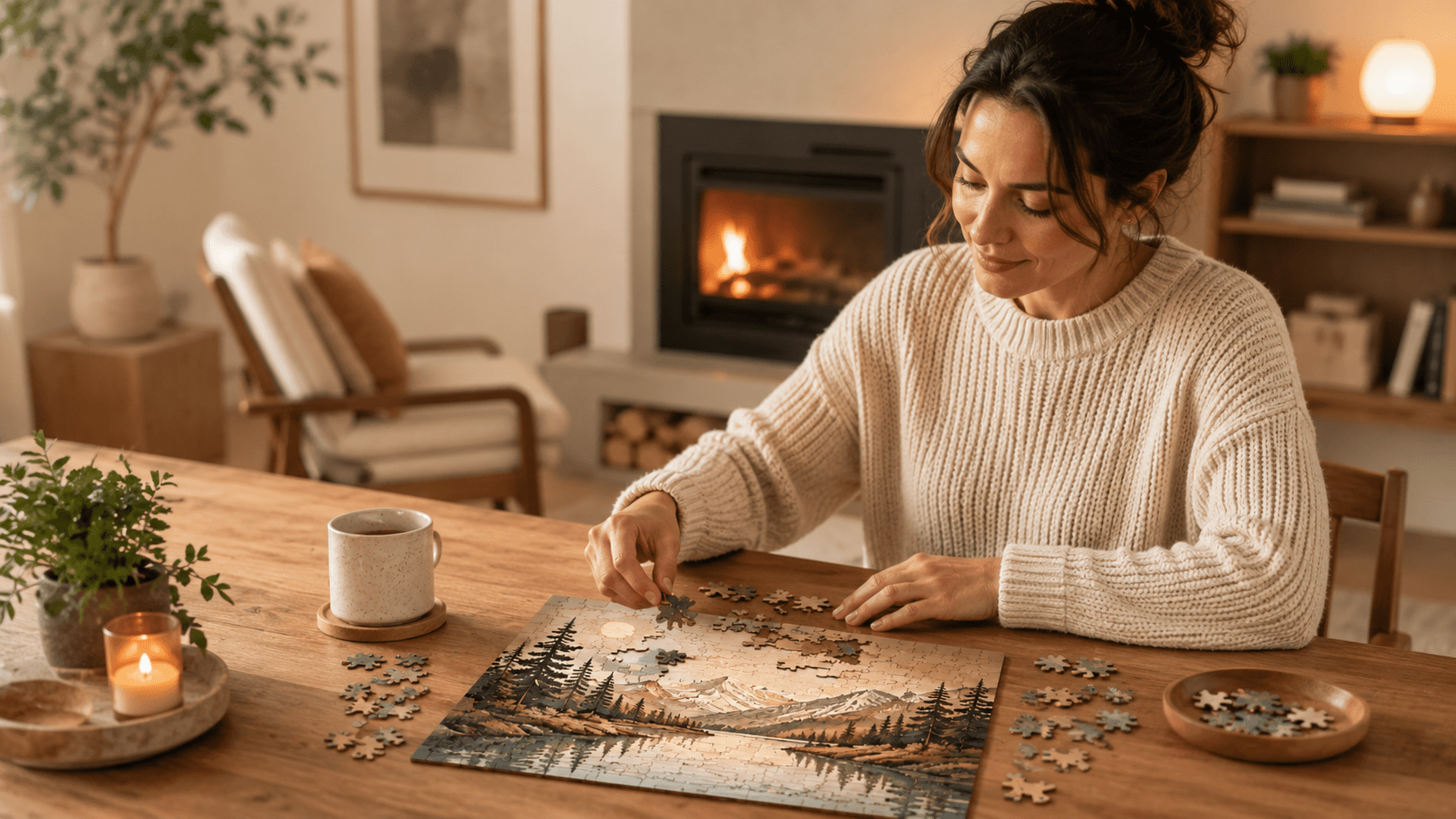
Wooden Puzzles for Adults: Why They Feel Different and How to Choose
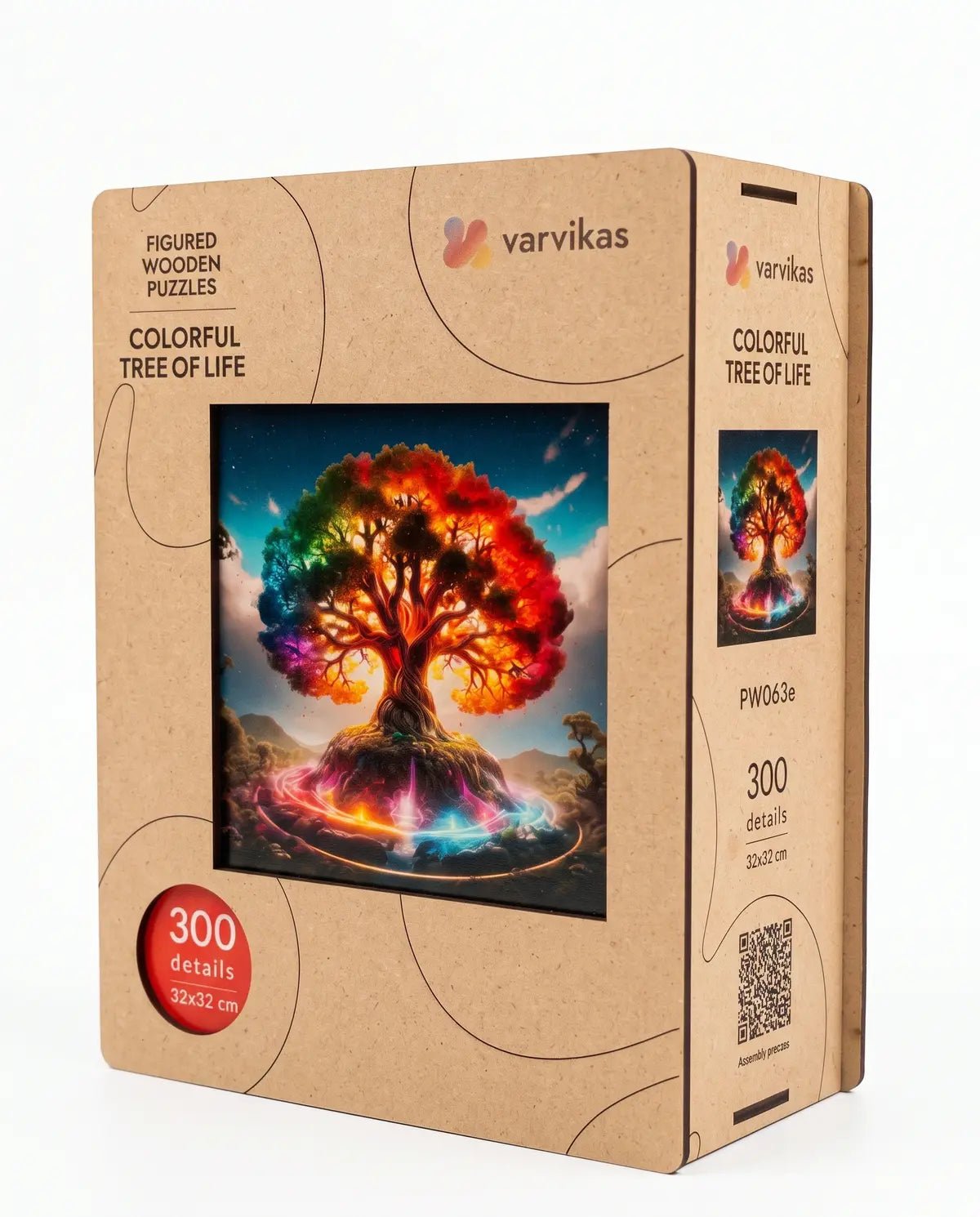
A wooden puzzle creates anticipation before the first piece is placed. A beautifully designed box holds more than an image: it is an invitation to slow down for an evening, feel the wooden pieces in your hands, notice their light wood scent and discover how different they are from ordinary cardboard puzzle pieces. Some models include unexpected silhouettes that are enjoyable to examine on their own before they find their place in the picture.
That is why the finished image is only part of the appeal. The experience begins when you open the box, continues through every small discovery and becomes especially satisfying when a loose group of pieces starts to reveal a familiar shape. If you want a screen-free activity with calm focus and moments of surprise, begin with a picture you would be happy to uncover piece by piece.
There is no single correct way to start. You might follow a bright colour, the edge of a wave or a distinctive shaped piece. The puzzle gradually draws your attention into one visual world, whether you spend a few quiet minutes with it or stay at the table for longer.
What makes a Varvikas wooden puzzle different?
Wood gives the experience a character of its own. You notice the outline, smooth surface and slight weight of a piece as well as the detail printed on it. A good match is satisfying to the touch as well as to the eye, so assembling the puzzle becomes an enjoyable activity in itself; the finished picture is not the only reward.
Materials, piece counts and model-specific features can vary. If a particular detail matters to you—such as shaped pieces or the finished dimensions—use the exact product page as your guide.
Choose a picture that draws you in
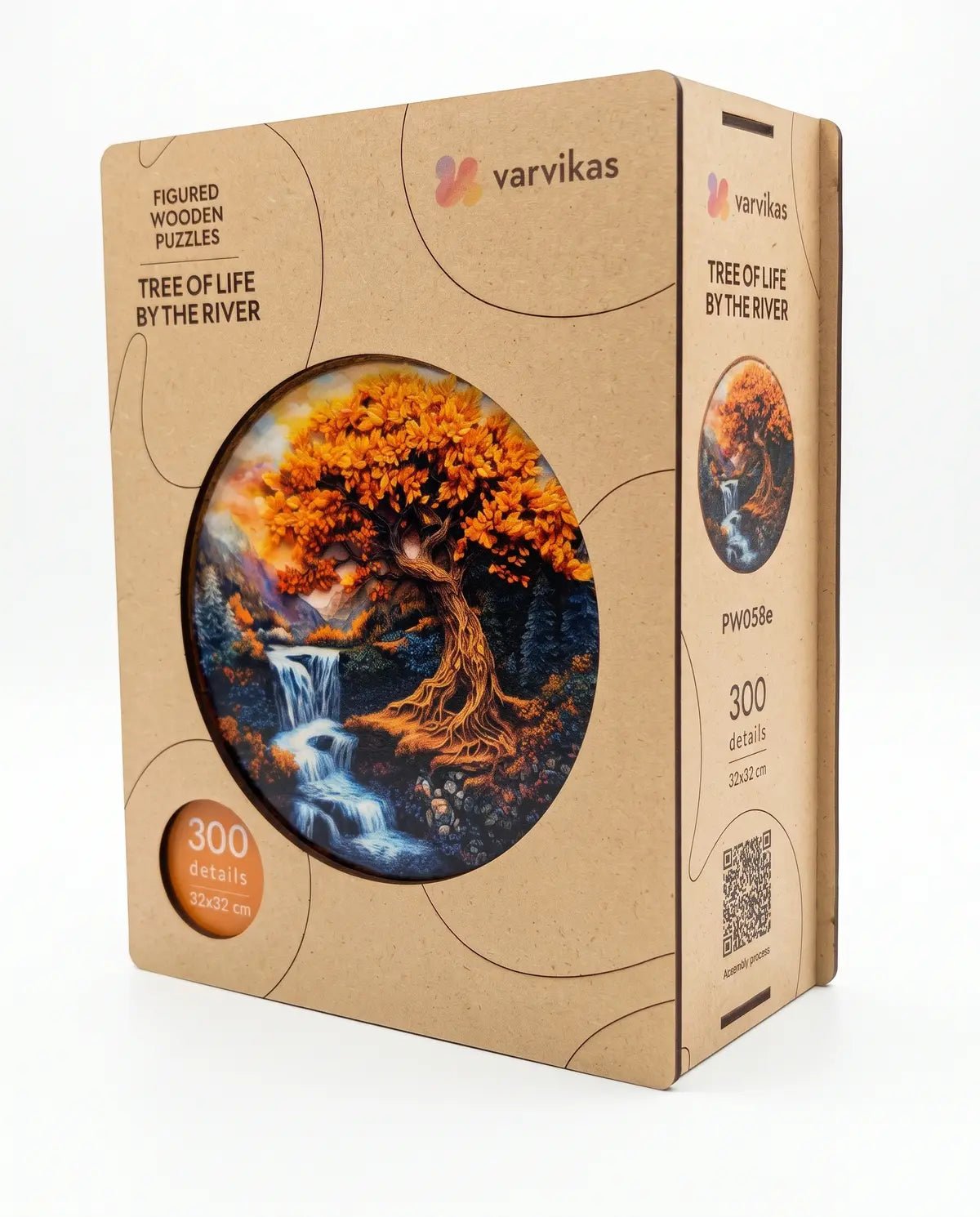
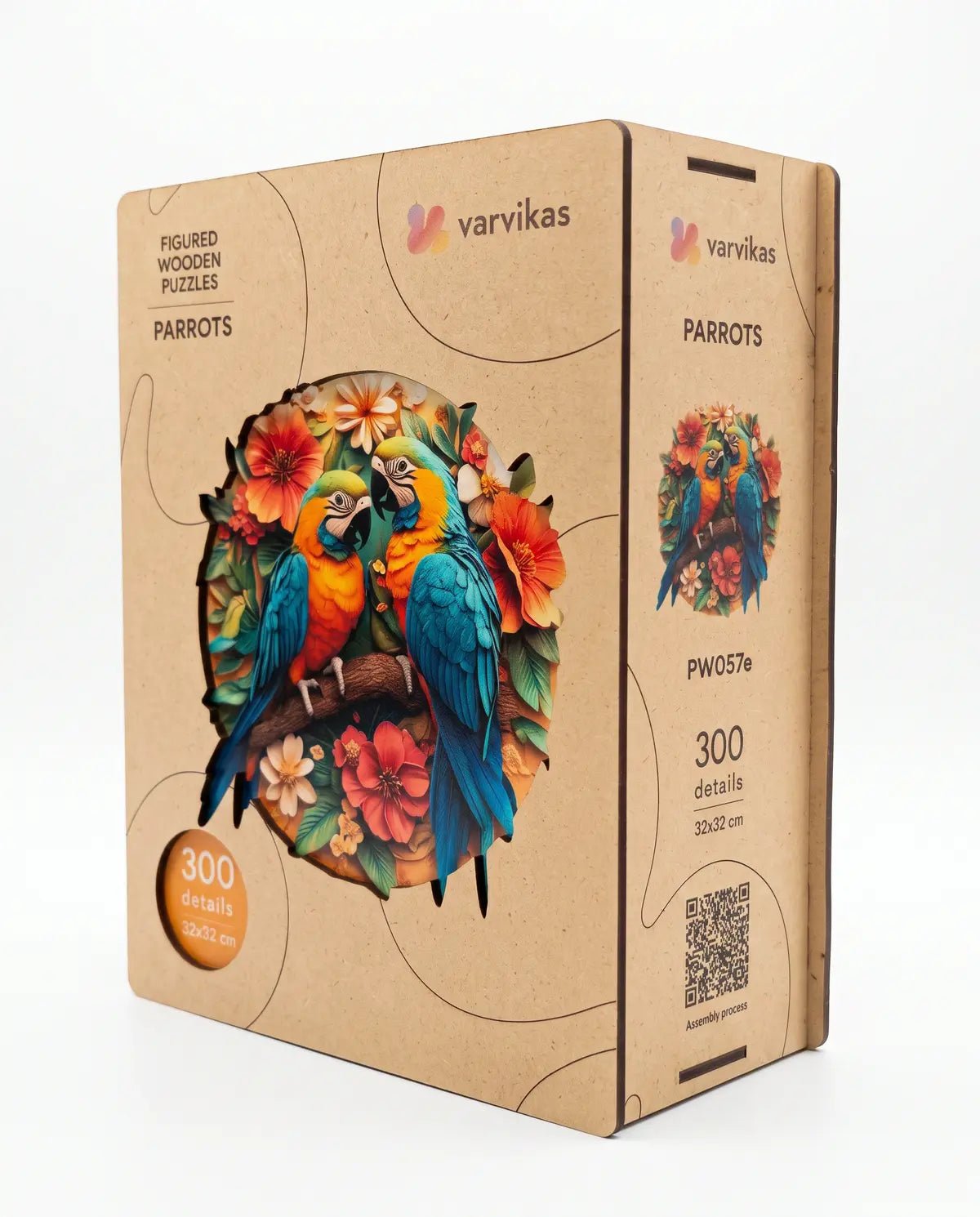
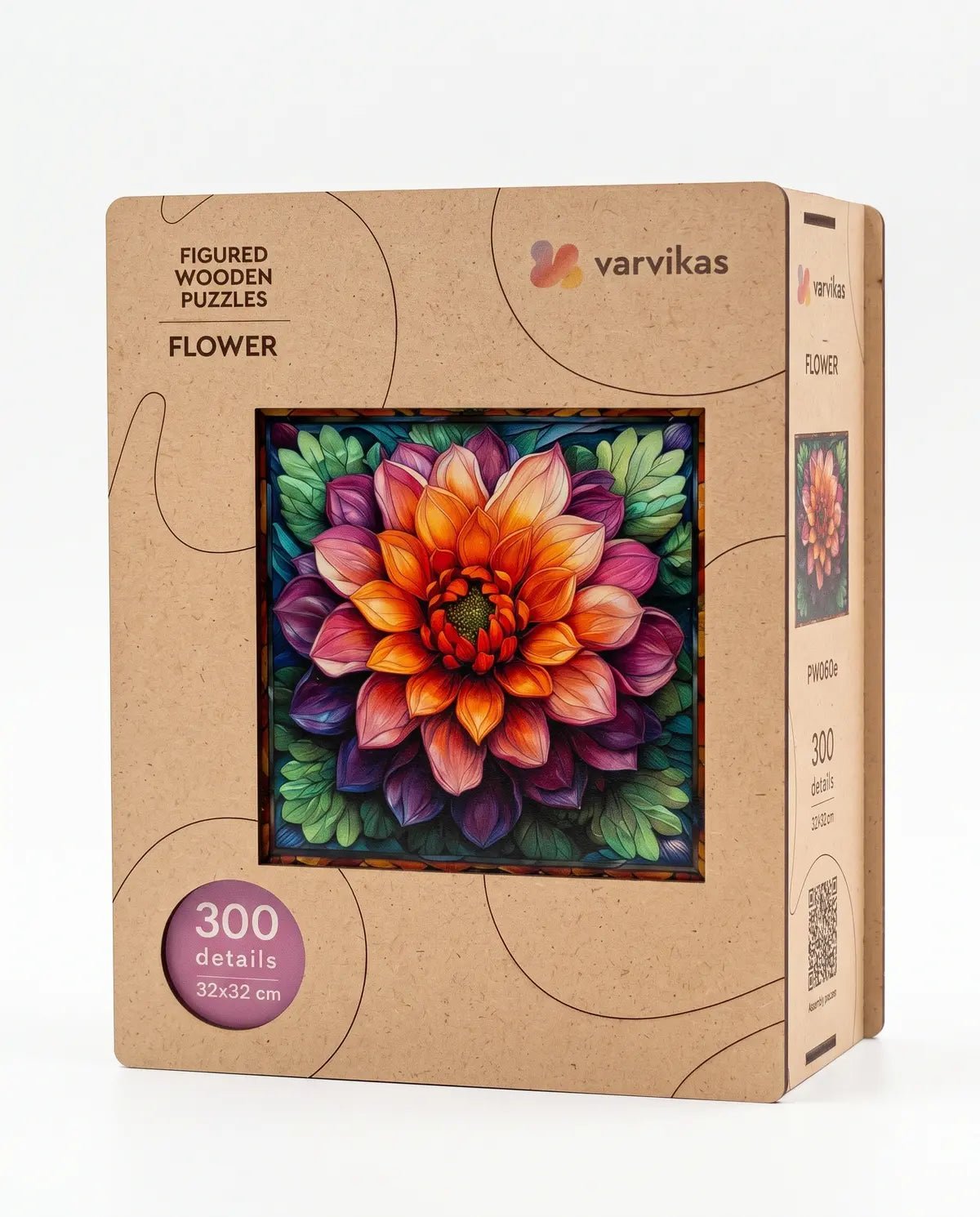
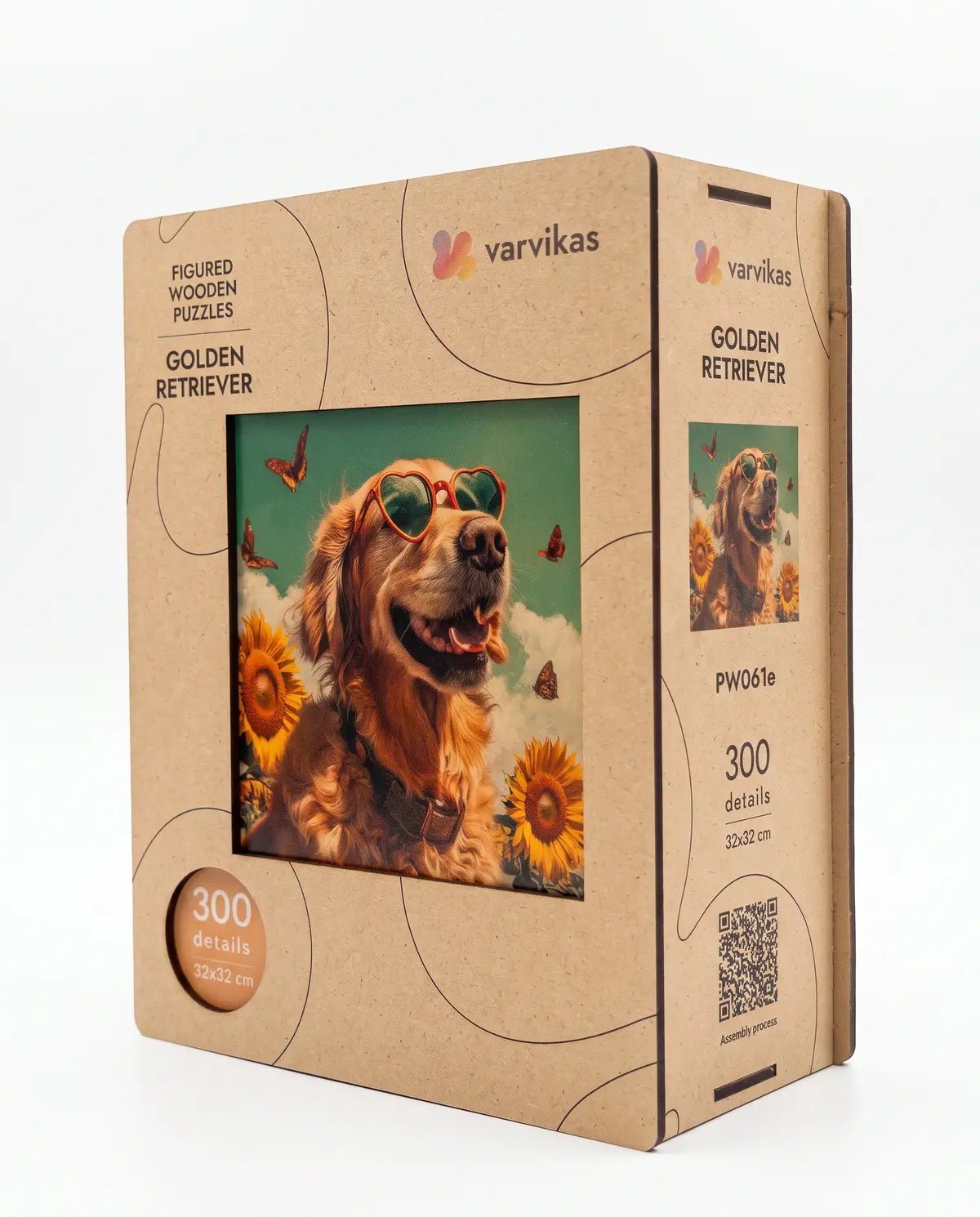
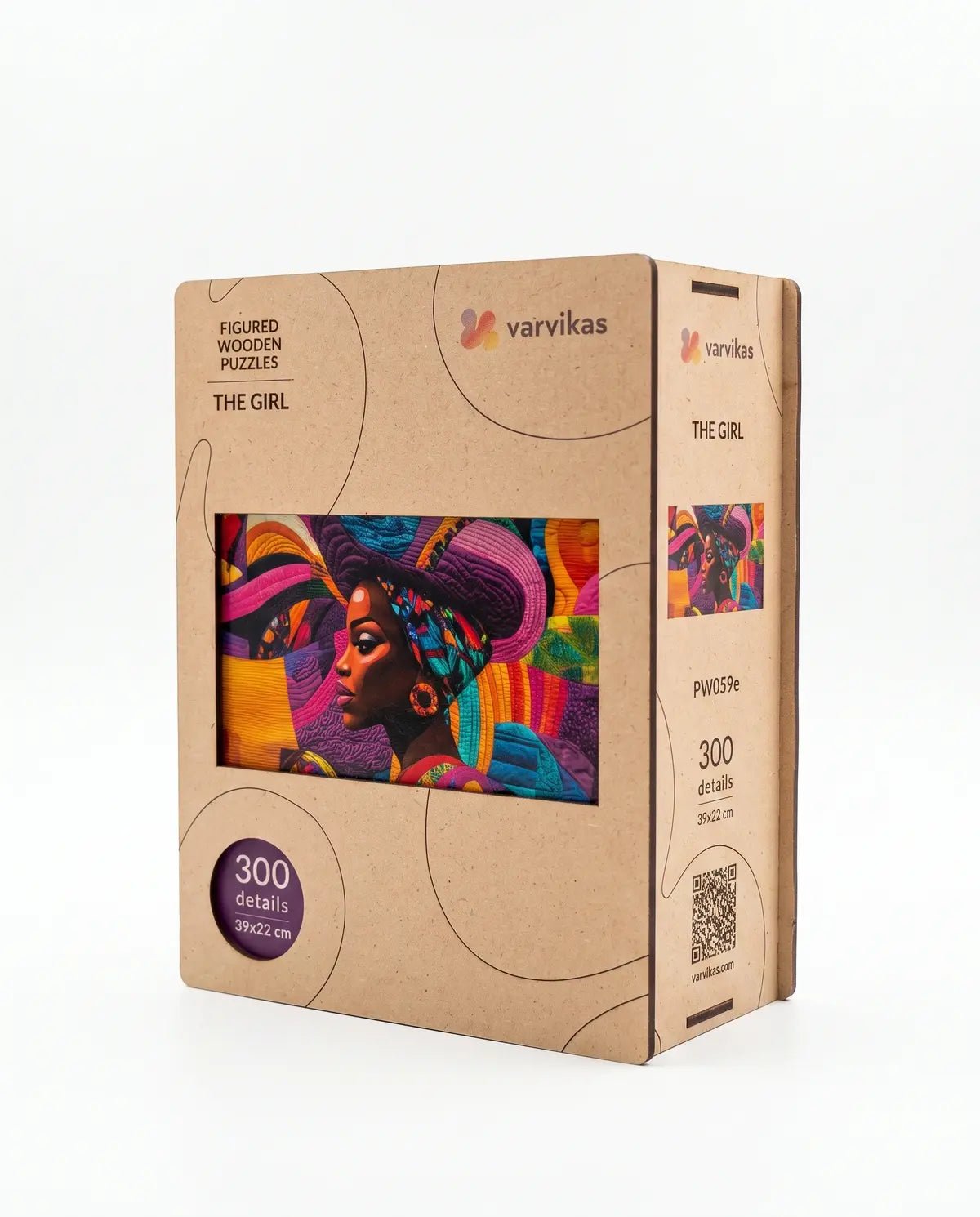
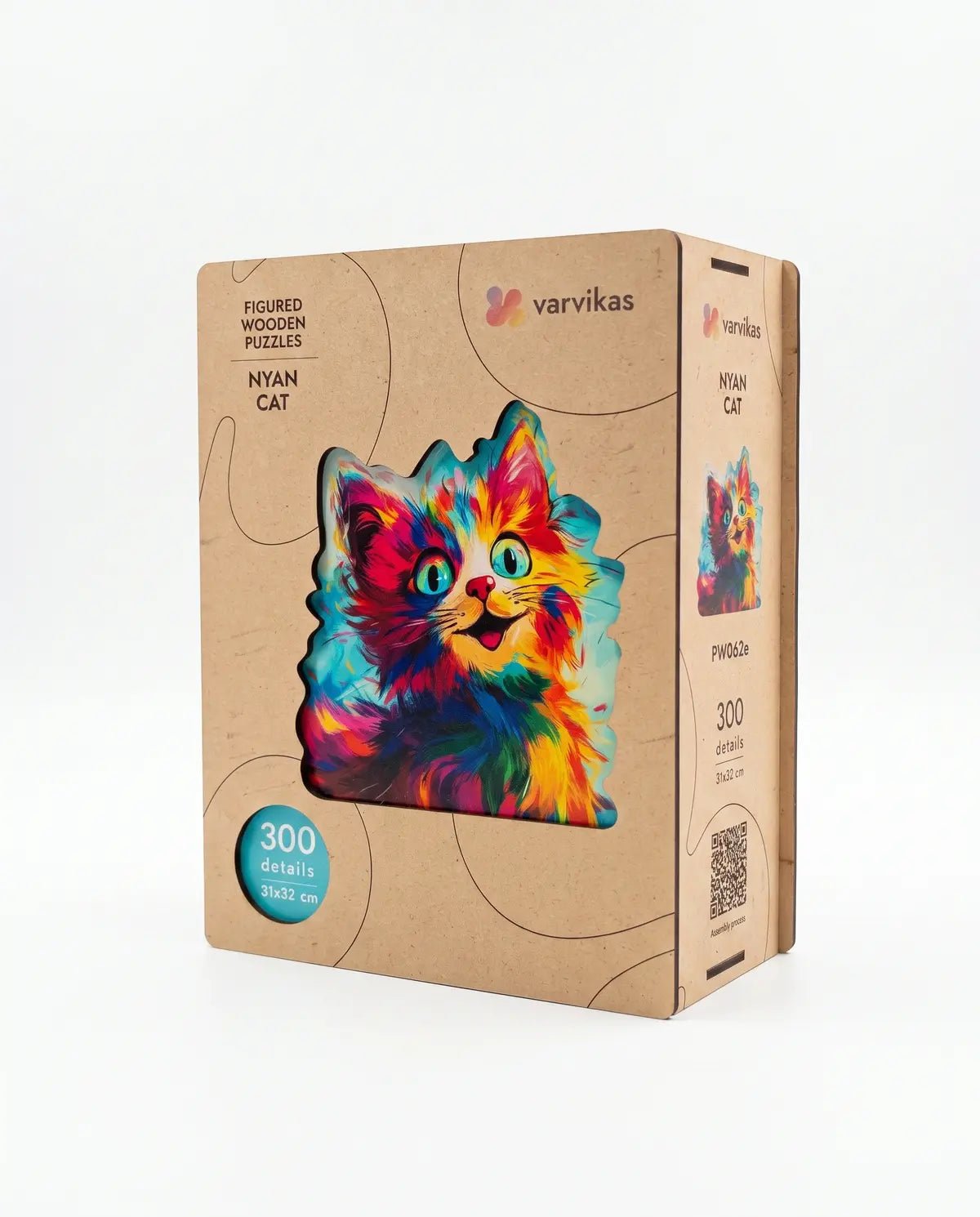
Your first question does not need to be “Which puzzle is supposed to be the right difficulty?” Start with the scene you want to return to. Varvikas wooden puzzles explore sea life, nature and trees, bright birds, pets and wild animals, flowers and imaginative decorative art. One person may want the colours of the ocean; another may be drawn to a dog, a cat, a golden tree or a floral composition.
Moon Tree and Autumn Colors are among Varvikas’ popular wooden-puzzle designs. They show how different the mood can be: one feels imaginative and slightly dreamlike, while the other brings the warmth of an autumn landscape.
Piece count and finished size help you understand how substantial the puzzle will be, but they should not eclipse the picture itself. More pieces do not make a puzzle universally harder, and fewer pieces do not guarantee that everyone will find it easy. Look at the image and ask whether you would enjoy noticing it in stages—first a colour, then a recognisable outline and eventually a complete part of the scene.
Different subjects also create different kinds of attention. A marine scene invites you to follow shades and flowing lines; birds and animals offer familiar forms; flowers and fantasy trees make colour the main pleasure. You do not need to chase the most demanding option. Choose the picture that creates quiet curiosity and makes you want to open the box again tomorrow.
Small discoveries as the picture takes shape
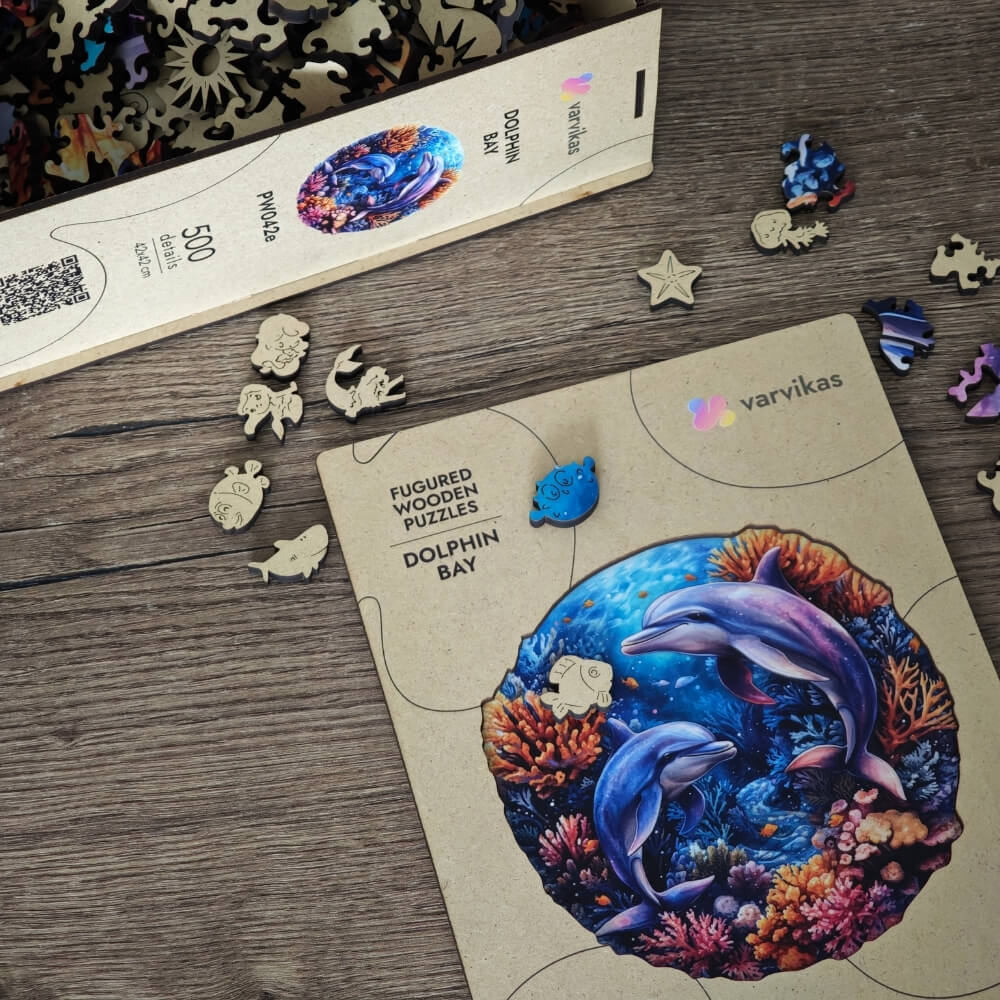
Shaped pieces can change the rhythm of the search. A recognisable silhouette appears among the usual fragments, giving you a reason to pause, take a closer look and perhaps show it to someone beside you. Dolphin Bay is one model where marine and animal shapes are especially visible.

These details give a puzzle personality. The image develops gradually, but every individual find can be rewarding: a shape in your hand, an edge that fits, or a small character hidden among the pieces. If shaped elements matter to you, confirm them on the page for the model you choose.
Sometimes one unusual piece sets the tone for the whole session. You can leave it aside for a moment, study it in the light and return to it later. Pauses like this do not distract from the finished image; they make revealing it more memorable.
Enjoy it on your own or together
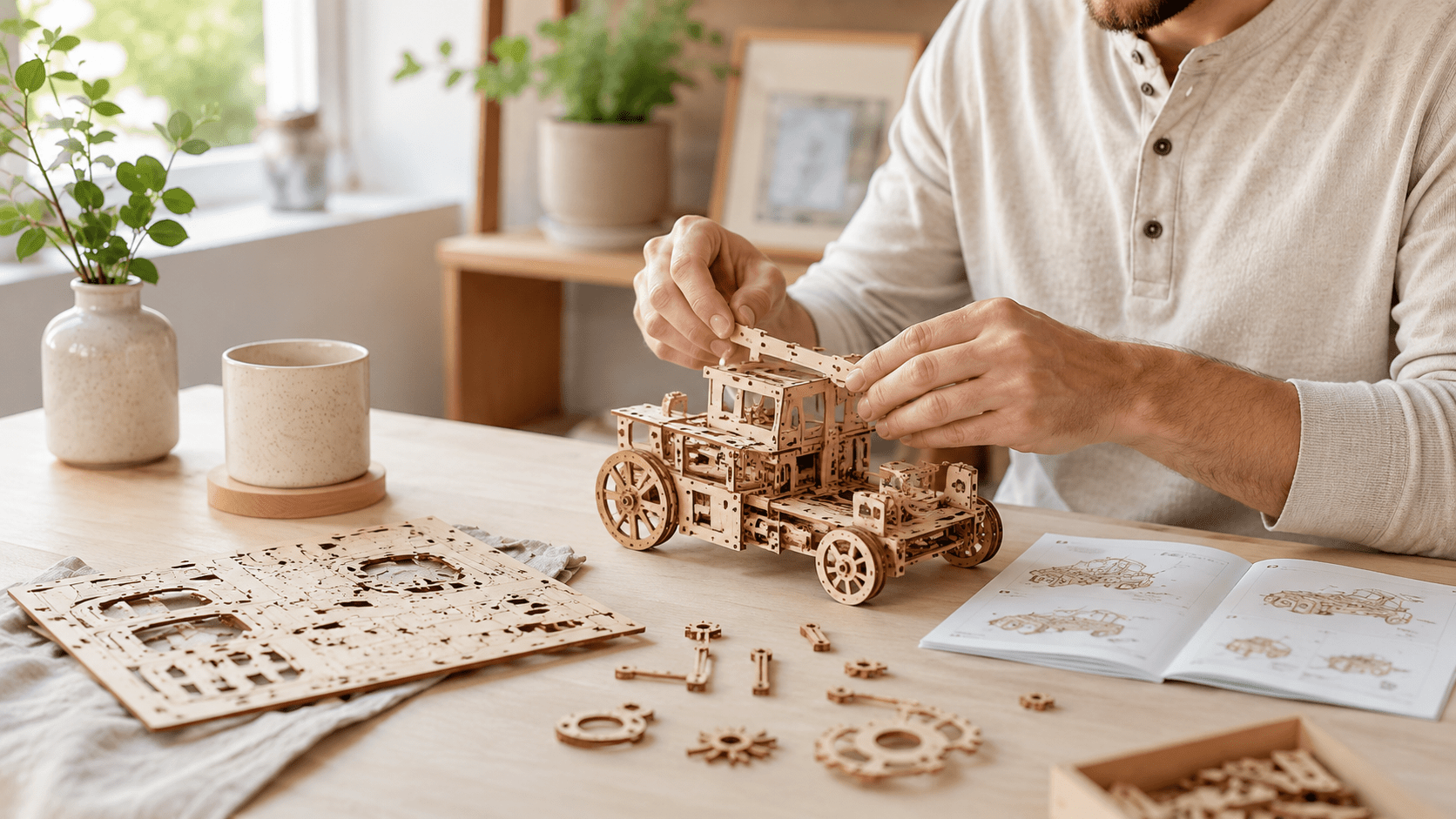
On your own, a wooden puzzle lets you follow your own pace: search without hurry and watch more of the picture come together. With a partner or family, it becomes a shared hunt. You can exchange discoveries, smile at an unexpected shape and wait together for the moment when the scene starts to feel complete. There is no need to assign roles; simply begin with the part that catches someone’s eye.
That freedom is part of the pleasure. Return for a few quiet minutes or stay longer when the picture holds your attention. One person may notice the shade of the water while another finds a playful silhouette. If you prefer silence, there is just the wood, the image and the satisfaction of the next precise fit.
A wooden puzzle as a gift
A gift can be more memorable when it offers anticipation as well as an object. The designed box and chosen picture create the first impression; the search for pieces becomes time enjoyed alone or together; and the completed image can remain on display. The experience of assembling, the appearance of the finished puzzle and the reason for giving it are distinct parts of the gift.
How to choose your first wooden puzzle
- Choose a picture that creates an emotional response and rewards a closer look.
- Use the product page to check the piece count and the dimensions of the finished image.
- Think about the occasion: is the puzzle for your own quiet time, an evening together or a gift? That will help you choose the subject and how much you want to take on.
Discover your wooden puzzle
Start with the Varvikas Wooden Puzzles collection and choose the picture you would like to reveal one piece at a time.
If you are comparing different ways to enjoy time away from screens, read our guide to the best screen-free hobbies for adults.
If you are still choosing the kind of first creative project you want, compare the options in our first creative kit guide.





Leave a comment
This site is protected by hCaptcha and the hCaptcha Privacy Policy and Terms of Service apply.